
Synthetic fuels
E-Fuels
E-fuels, also known as synthetic fuels, are liquid fuels produced from renewable energy sources such as wind or solar energy.
These fuels have similar chemical properties to fossil fuels and can therefore be used in conventional combustion engines without the need for modifications to the vehicle.
However, the production of e-fuels requires a lot of energy, which must be generated from renewable sources in order to have a positive environmental impact. There are different types of e-fuels (gasoline, diesel, kerosene, naphtha, methanol) that can be produced from different feedstocks, including CO2 capture and utilization.
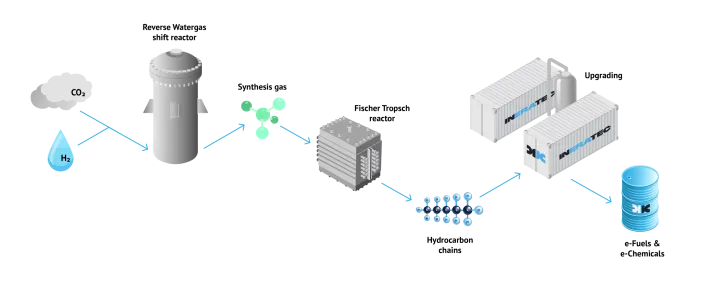
Production of e-Fuels
1. Producing Renewable Hydrogen
Using renewable electricity, water is split into hydrogen and oxygen through electrolysis. The hydrogen obtained in this way forms the basis for the production of e-Fuels.
2. Converting CO₂ and Hydrogen into Hydrocarbons
The green hydrogen is reduced with CO₂ and processed into synthesis gas. Synthetic hydrocarbons are produced in the subsequent Fischer-Tropsch synthesis.
3. Refining fuels and products
The synthetic hydrocarbons are then further processed into products such as e-SAF, e-diesel, e-naphtha, or synthetic waxes.
e-Fuels
Advantages and Challenges
ADVANTAGES |
| CHALLENGES |
Use of Existing Fuel and Distribution Infrastructure |
| High Demand for Renewable Energy
|
Use in sectors where electrification is difficult, such as aviation and shipping
Storable and Transportable Liquid Energy Sources |
| Industrialization and Expansion of Production Capacity
Profitability Depends on Energy Prices and Regulatory Conditions |
Long-Term Storage of Renewable Energy |
| Scaling of the Entire Value Chain Is Required |
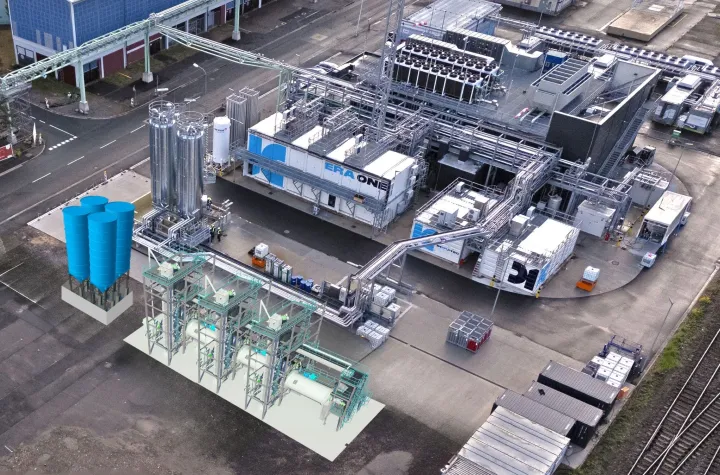
e-Fuels from INERATEC
ERA ONE, operated by INERATEC in Frankfurt-Höchst, is one of the largest power-to-liquid plants in Europe. There, synthetic hydrocarbons are produced from renewable hydrogen, biogenic CO₂, and renewable energy, and processed into e-fuels and other sustainable products. The plant is primarily designed for the production of MATERA e-SAF® and serves as an industrial reference facility. In addition, INERATEC offers modular plant designs for projects of various sizes, ranging from demonstration plants producing 40 kg of product per hour to large-scale plants with production capacities well over 4,000 kg of product per hour.
FAQ on e-Fuels